
Is Mid-Century over?
Why Interior Design struggles to move into the next era…
Interior design trends have always moved with a certain kind of speed. What feels like the height of sophistication one year can quickly become a liability the next. I see it often in my own work: clients who once loved a look begin to feel it dates their home, and the conversation naturally turns to what comes next.
We all remember that moment in The Devil Wears Prada when Miranda Priestly delivers her legendary “Cerulean” monologue, tracing a single colour from high-end runways through a chain of designers and retailers before it inevitably lands in the clearance bin. Interiors tend to follow the same pattern - what begins as distinctive and aspirational can, with enough exposure, lose its edge entirely.
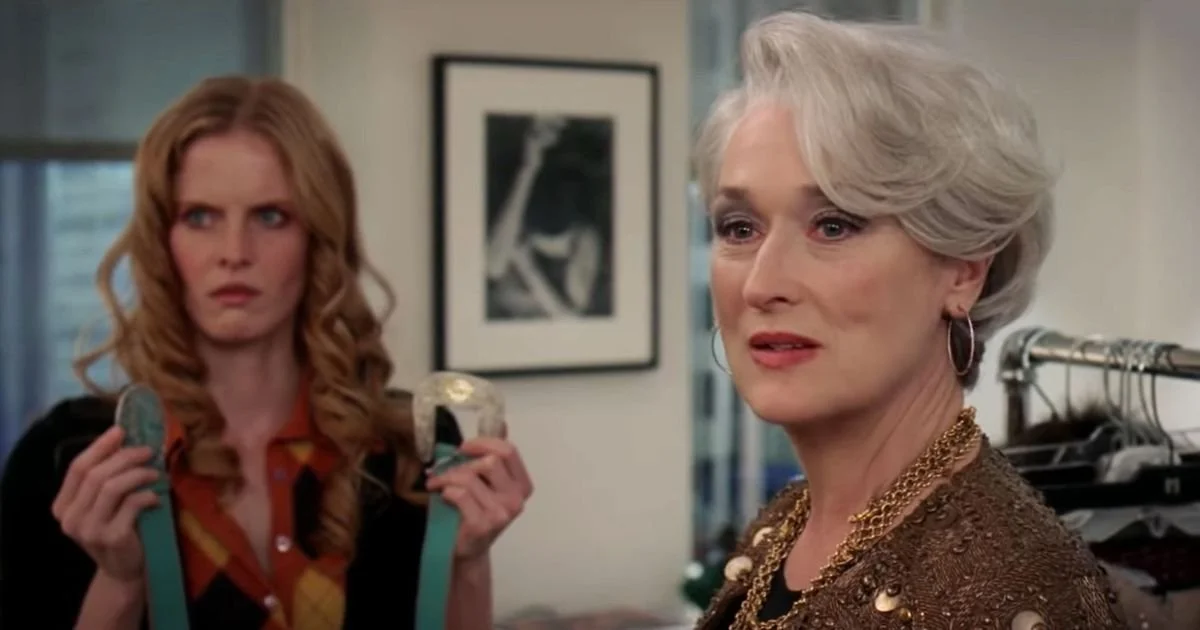
Still from The Devil Wears Prada (2006)
And yet, Mid-Century Modern (MCM) has proven unusually resistant to that cycle. I’ve watched it move beyond trend status into something closer to a default over the past two decades, steadily saturating both high-end and mass-market spaces. By the usual rules of design evolution, it should have faded by now.
But it hasn’t. Clients still ask for it, and designers (myself included) still find ways to work with it. Which raises the question: are we holding on, or has MCM quietly become something more permanent?
From the Bauhaus to the home
To understand why it hasn’t gone away, it helps to look at why it arrived. Mid-Century Modern was shaped by post-war thinking and grounded in the ethos of the Bauhaus - a clear break from the ornate, often inaccessible furniture of the early 20th century.
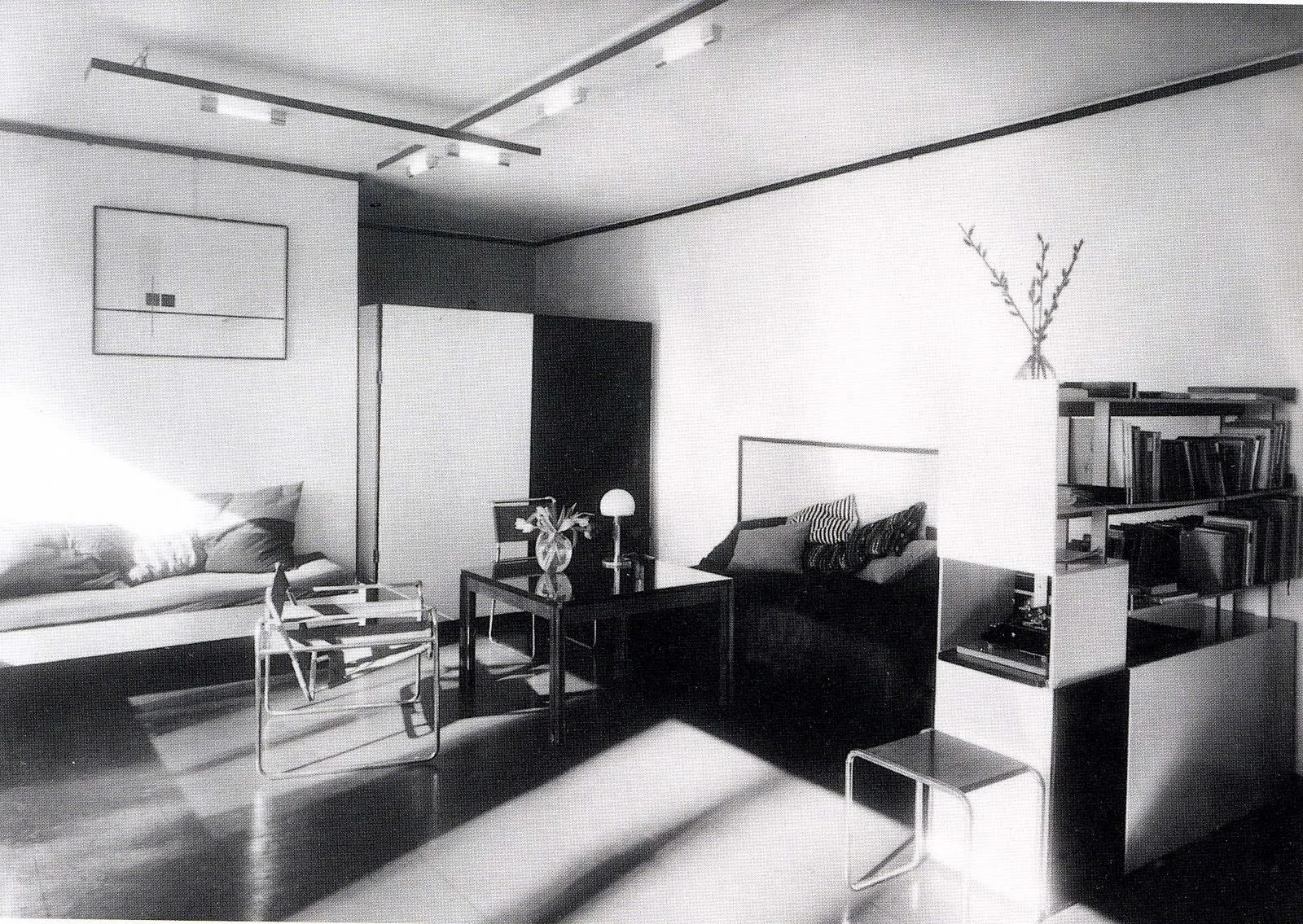
After 1945, those elaborate styles felt out of step with how people wanted to live. Design shifted toward something more practical, guided by the idea that form should follow function. What emerged was a new aesthetic: simple, considered, and designed with production in mind.
This is where MCM’s staying power begins. It wasn’t just about how things looked - it was about who they were for. At its core was a social ambition: well-designed, thoughtfully made furniture accessible to a broader audience. Design for everyday life, not just the few.
How Mid-Century Modern returned (and why it lasts)
Interiors did eventually move on from MCM, shifting toward the high-tech futurism of the 1970s and the exuberant postmodernism of the 1980s. But in the early 2000s, designers such as Kelly Wearstler began reintroducing these vintage silhouettes, layering them with a new kind of high-octane glamour.
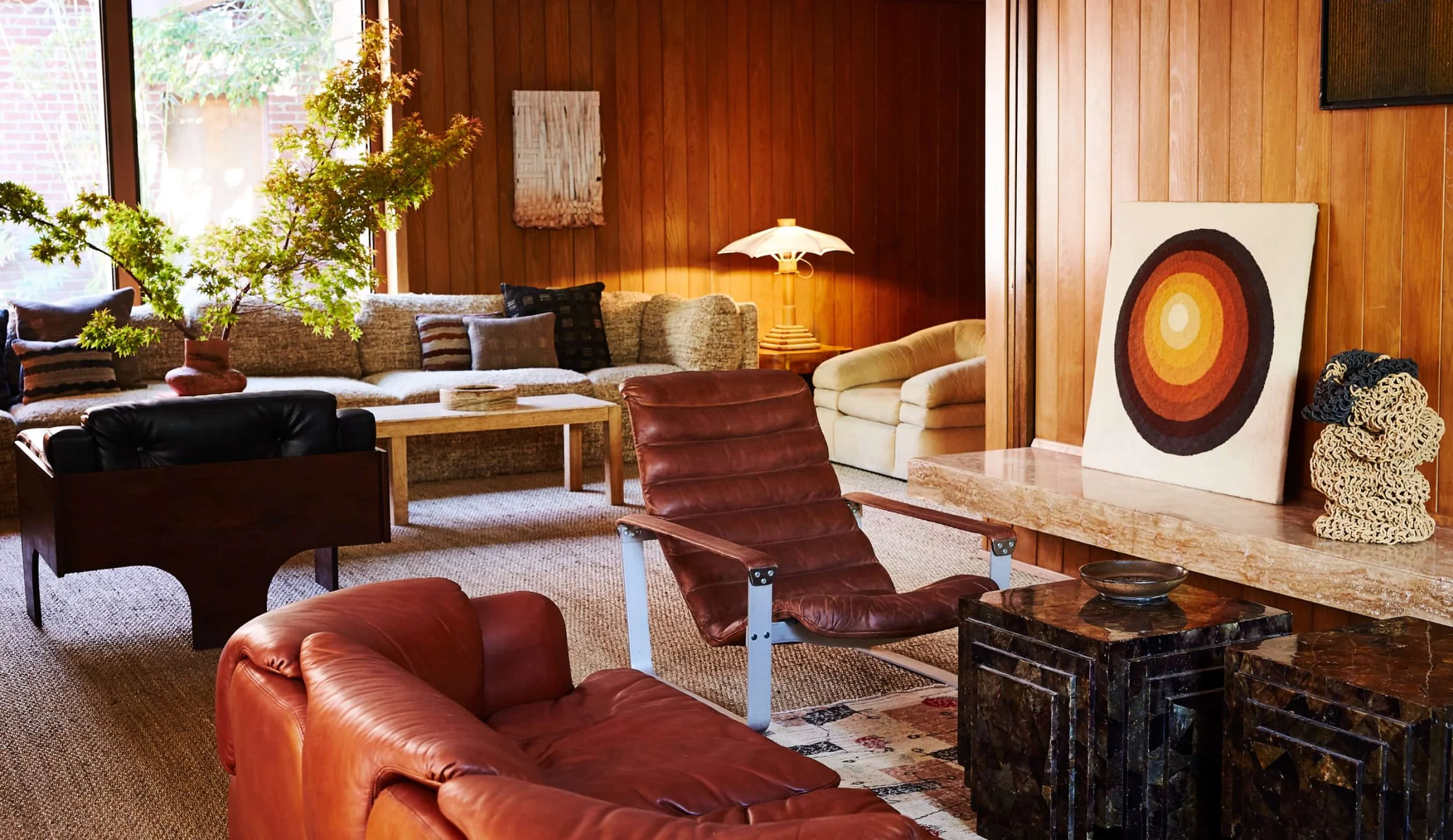
Image Credit: Kelly Wearstler
So why did it stick? A quick look at the high street offers a clue. As global furniture production moved toward a mass-produced, “fast fashion” model, driven by brands like IKEA and West Elm, and now amplified by sites such as Temu, there’s been a noticeable drop in longevity. These pieces can look the part at first, but they’re rarely made to withstand real life, often encouraging a cycle of replacing rather than keeping.
In contrast, original mid-century pieces were built with durability in mind. It’s not unusual to come across a 1950s sideboard that remains structurally superior to many new equivalents. They’re robust, they wear well, and they improve with age, qualities that sit comfortably alongside today’s growing focus on sustainability.
Why we can’t stop seeing Mid-Century on our screens
Media has played a significant role in anchoring this aesthetic in our collective consciousness. Shows such as Mad Men helped re-glamorise the sharp tailoring and scotch-soaked walnut credenzas of the 1960s, but what we’re seeing now feels more layered - MCM has become a kind of visual shorthand.
Set designers continue to lean on it to signal everything from from sleek, utopian glamour to tension and restraint. You see it in the pristine, seductive interiors of Don't Worry Darling and the geometric precision of The Queen's Gambit. Elsewhere, its stark lines create contrast or a sense of order in otherwise chaotic scenes, while its architectural roots are explored more directly in The Brutalist.
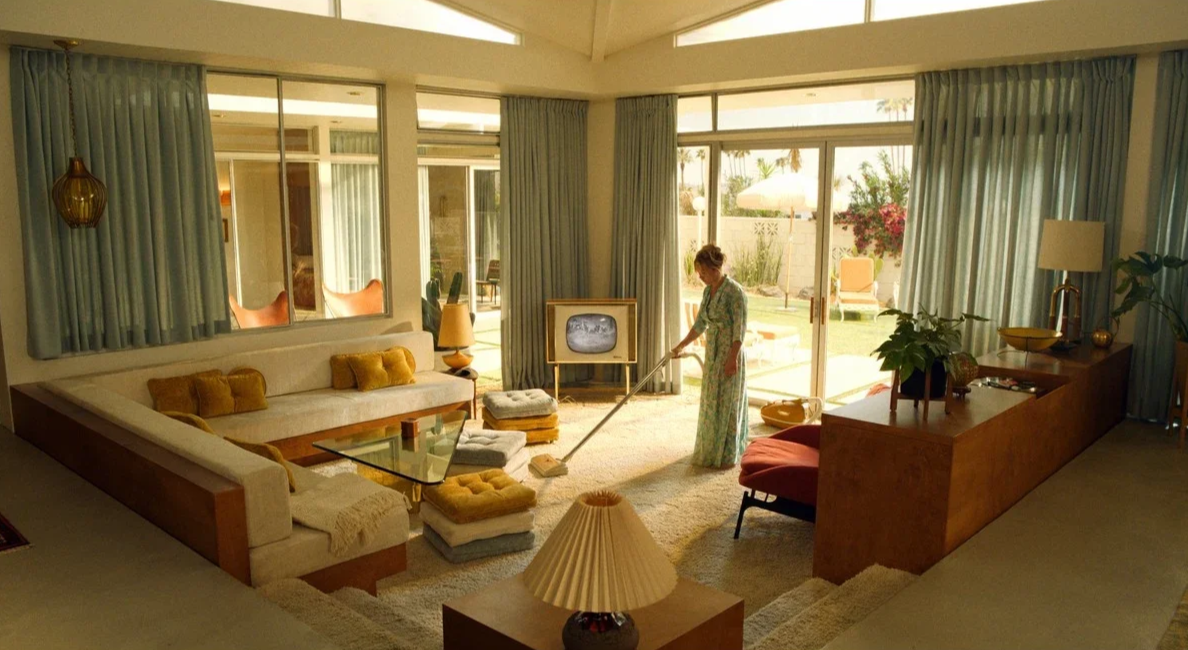
Still from Don't Worry Darling (2022), directed by Olivia Wilde
From where I sit, cinema returns to mid-century forms because they’re visually resolved - they carry instant nostalgia, but also a certain clarity that reads well on screen. Still, it raises a question: is this ongoing reliance a quiet endorsement of the mid-20th century as a kind of design ideal, or simply a familiar language we haven’t quite learned to move beyond?
The comfort of Mid-Century in high-end design
Even in the upper echelons of design, MCM often provides a familiar safety-net. Studios such as Beata Heuman, Bryan O'Sullivan, Studio Ashby, and Rose Uniacke each bring a distinct sensibility to their projects, yet the low-slung seating, warm woods, and gentle curves of mid-century design often continue to be recurring features.
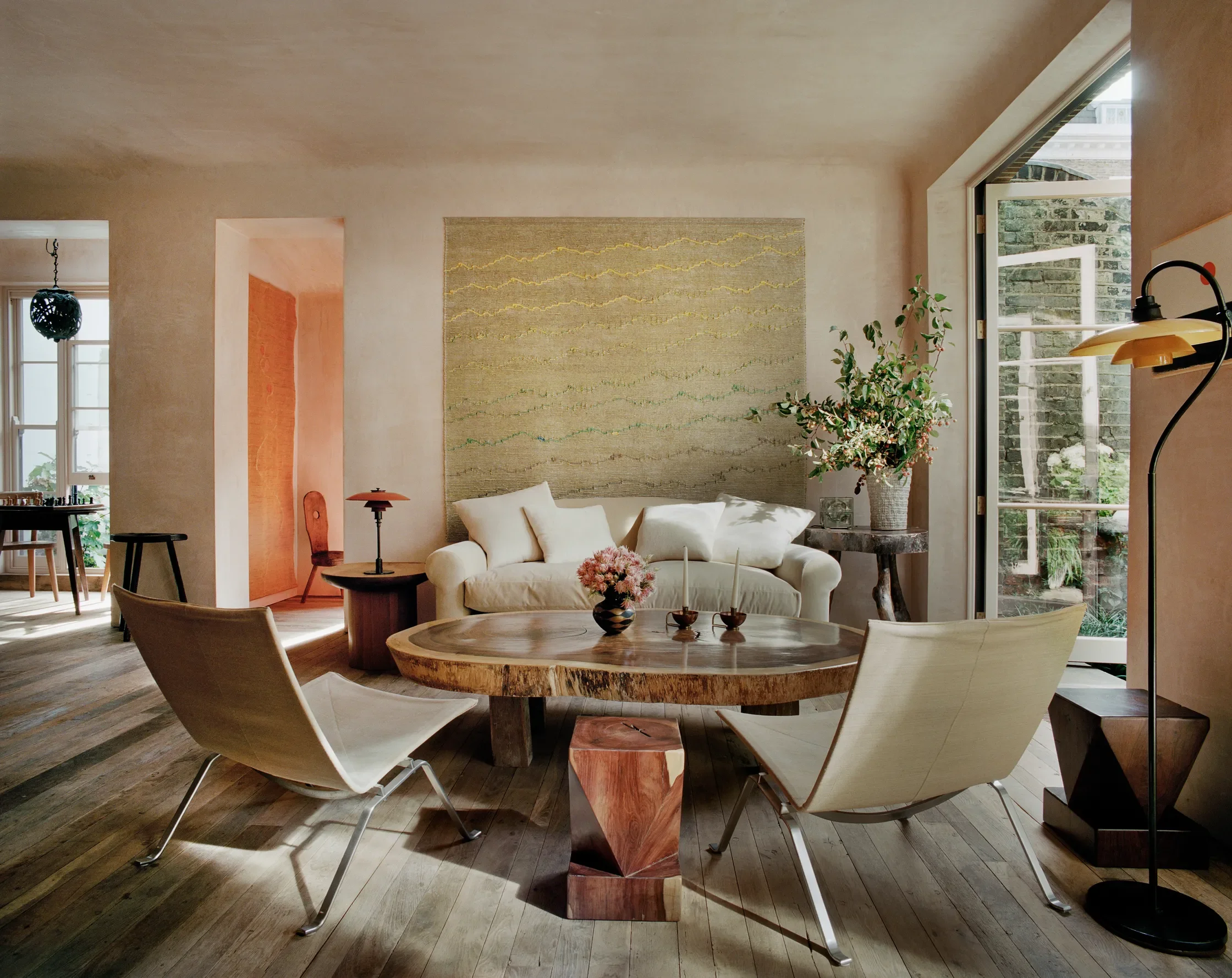
Image Credit: The World of Interiors, Designer: Rose Uniake, Photographer: François Halard
Hospitality spaces reflect the same pattern. Many of the most talked-about restaurants, bars, and hotels continue to lean on mid-century aesthetics, not from a lack of creativity, but because these forms remain visually compelling and versatile.
The market has effectively split. Mainstream brands offer accessible, stylised interpretations, while collectors chase originals. Pieces like a Finn Juhl Chieftain Chair or Charlotte Perriand Les Arcs furniture are valued as works of art, and subtle signals of taste as well as function.
How we make Mid-Century feel fresh at Design X Nada
At Design X Nada, we’ve observed this 'MCM fatigue' not as a reason to banish the era entirely, but as a mandate to interrogate it. Rather than dropping a tapered-leg chair into a room as a shortcut to a stylish design, our philosophy is instead rooted in an authentic sense of place- a celebration of context, honesty and individuality.
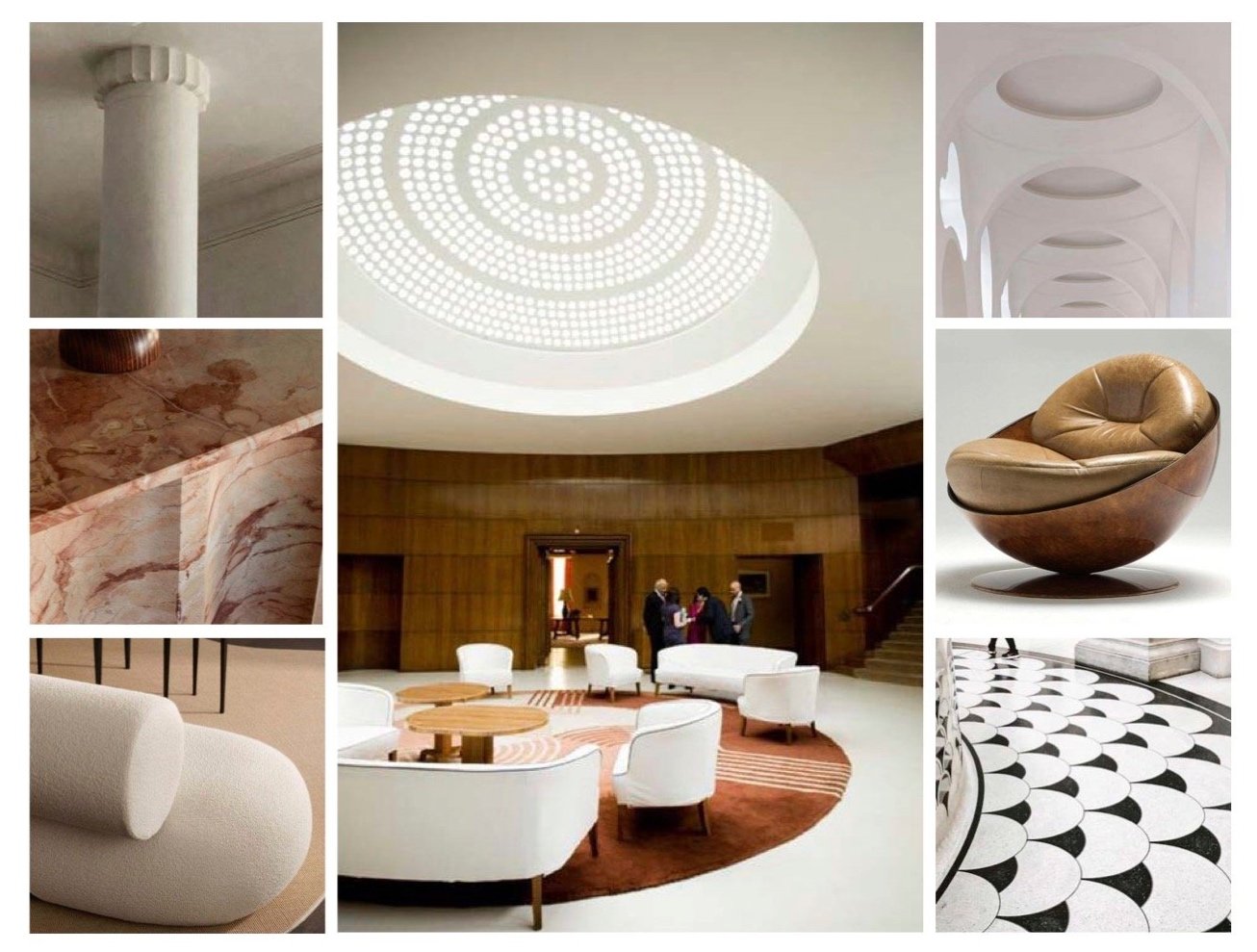
We want people to walk into a space and know where they are, taking cues from the architecture, country and cultural surroundings. Here is how we ensure our spaces spark lasting joy and endure across decades, regardless of the trend cycle:
Curation over duplication
Rather than giving an over-engineered unanimous aesthetic we like to curate furniture with diverse, eclectic items. We like to source pieces that are meaningful to the clients, sparking joy and nostalgia. The playful mix between contrasting eras is where the magic happens- telling a story of the client’s life and creating a layered tapestry.
Blending time periods
We often blend mid-century finds with 1970s brutalism (think a Mario Bellini Camaleonda sofa), 80s chrome, or even heavy Victorian antiques for a deeply layered, personalised aesthetic.
Honoring natural elements
The key elements of MCM -natural woods, rich leathers, and organic shapes - remain heavily in demand and form the foundation of the bespoke pieces we commission.
Sourcing as an investment
We don't just buy furniture; we source assets. We seek rare, "grail" pieces that tell the story of both the property and the client, ensuring they retain their resale value and act as a sound financial investment.
Going all-in (when appropriate!)
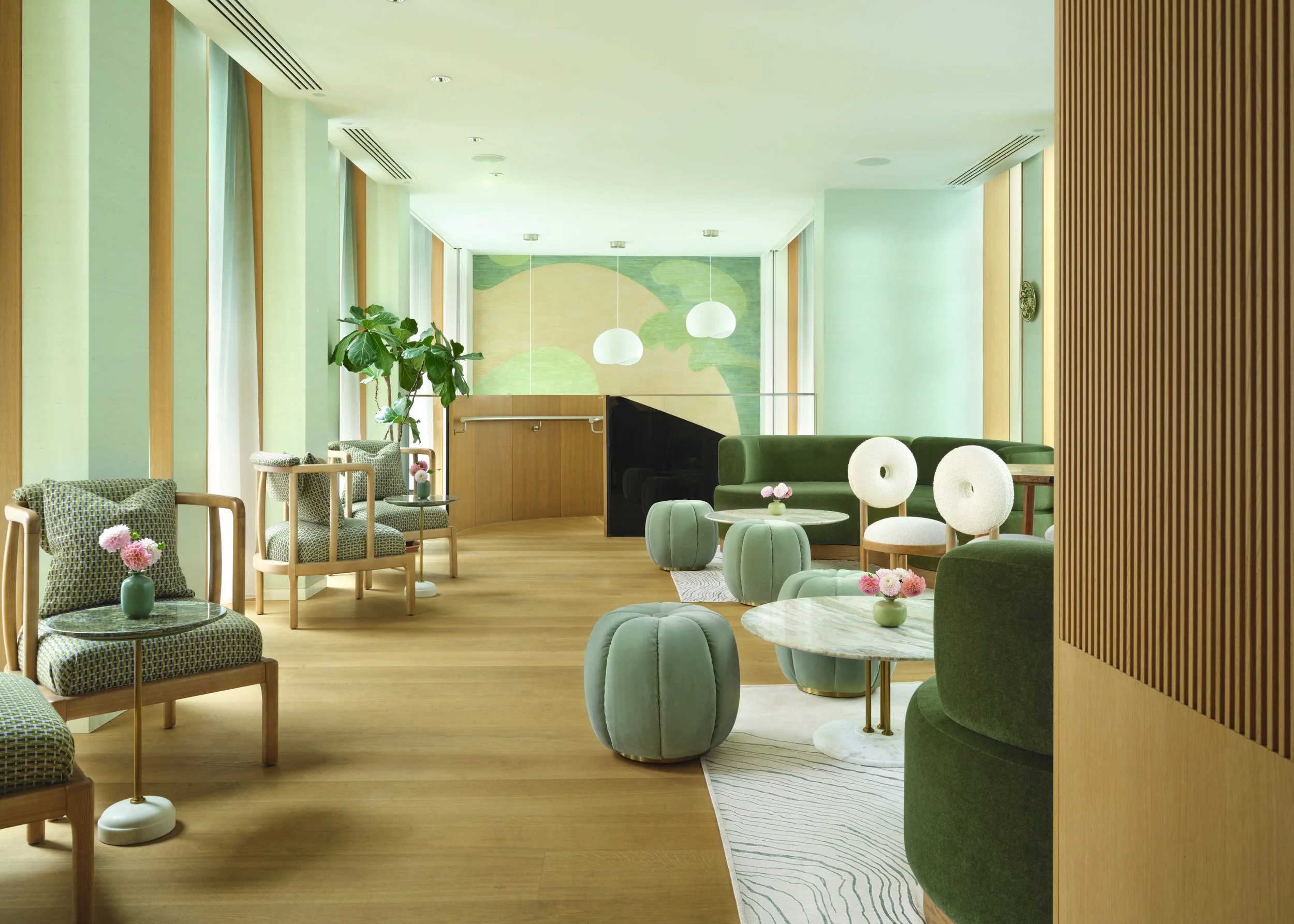
Alternatively, if the architecture demands it, we might push for a total, maximalist embrace of a 1960s or 70s look, treating it as an immersive artistic statement rather than just placing a single, timid accent piece in a corner.
Is Mid-Century Modern here to stay?
While the search for something entirely new and groundbreaking continues, I think a full departure from MCM doesn’t seem likely anytime soon. Micro-trends come and go - from the austere beige-on-beige minimalism of Kim Kardashian’s mansion to recent bursts of surrealist flair. But mid-century modern remains a steady reference point.
That said, our relationship with it is evolving. Today, high-end interiors are less about chasing trends and more about building a lasting design legacy - choosing pieces and principles that endure, rather than simply staying on-trend.
Discover more of our work in our portfolio, or contact us to discuss an upcoming project.
All images are the property of their respective owners and are used for informational/editorial purposes.