
Marble: A Designer’s Guide
Sourcing and Styling Show-Stopping Stone
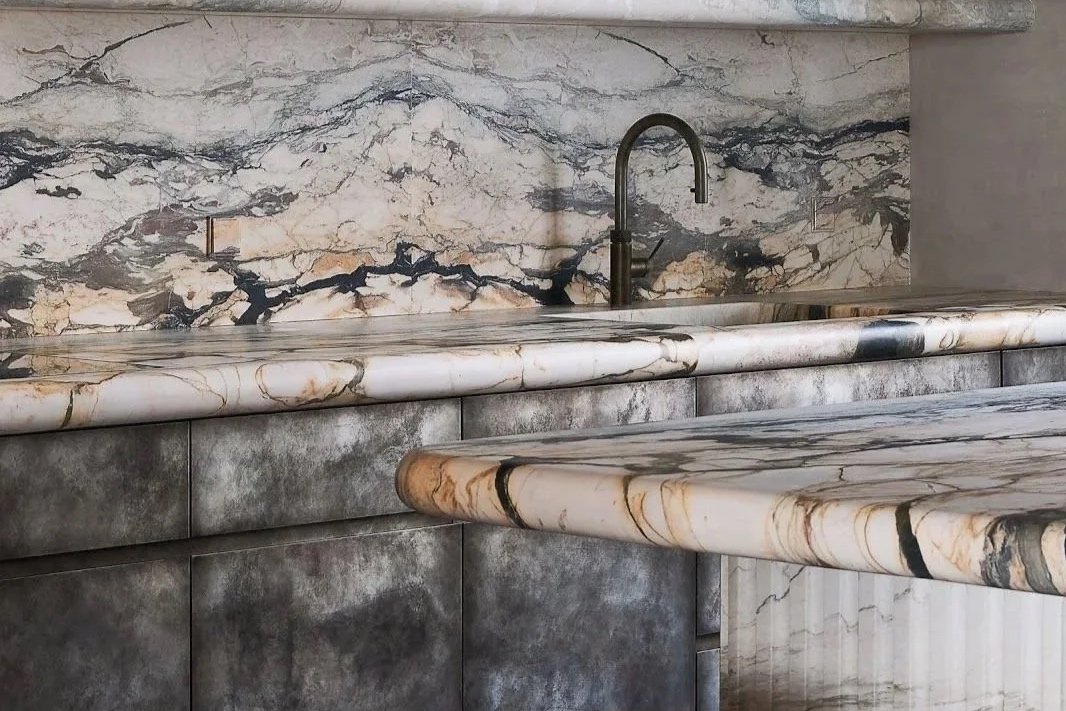
For years, the interior design world has been anchored by the quiet, classic elegance of marbles like Calacatta Oro and the stark, monochromatic drama of Nero Marquina. But tastes are shifting - toward interiors that feel more personal, more expressive - along with a growing reverence for marble in its most dramatic and artful forms.
Today, I’m one of many designers celebrating the emergence of unusual, show-stopping stones. We are seeing a gorgeous explosion of rich textures, wildly unpredictable veining, and deeply saturated colours adorning our kitchen islands, bathrooms, and dining tables. Working with these striking, heavily veined stones requires a delicate balance of audacity and restraint. As a studio, we approach these materials not just as surfaces, but as irreplaceable pieces of natural history.
If you are considering a bold stone for your next project, here are our essential do’s and don’ts for sourcing, styling, and living with a unique marble.
The Art of Sourcing
Finding the perfect slab is a visceral experience, like selecting a piece of fine art.
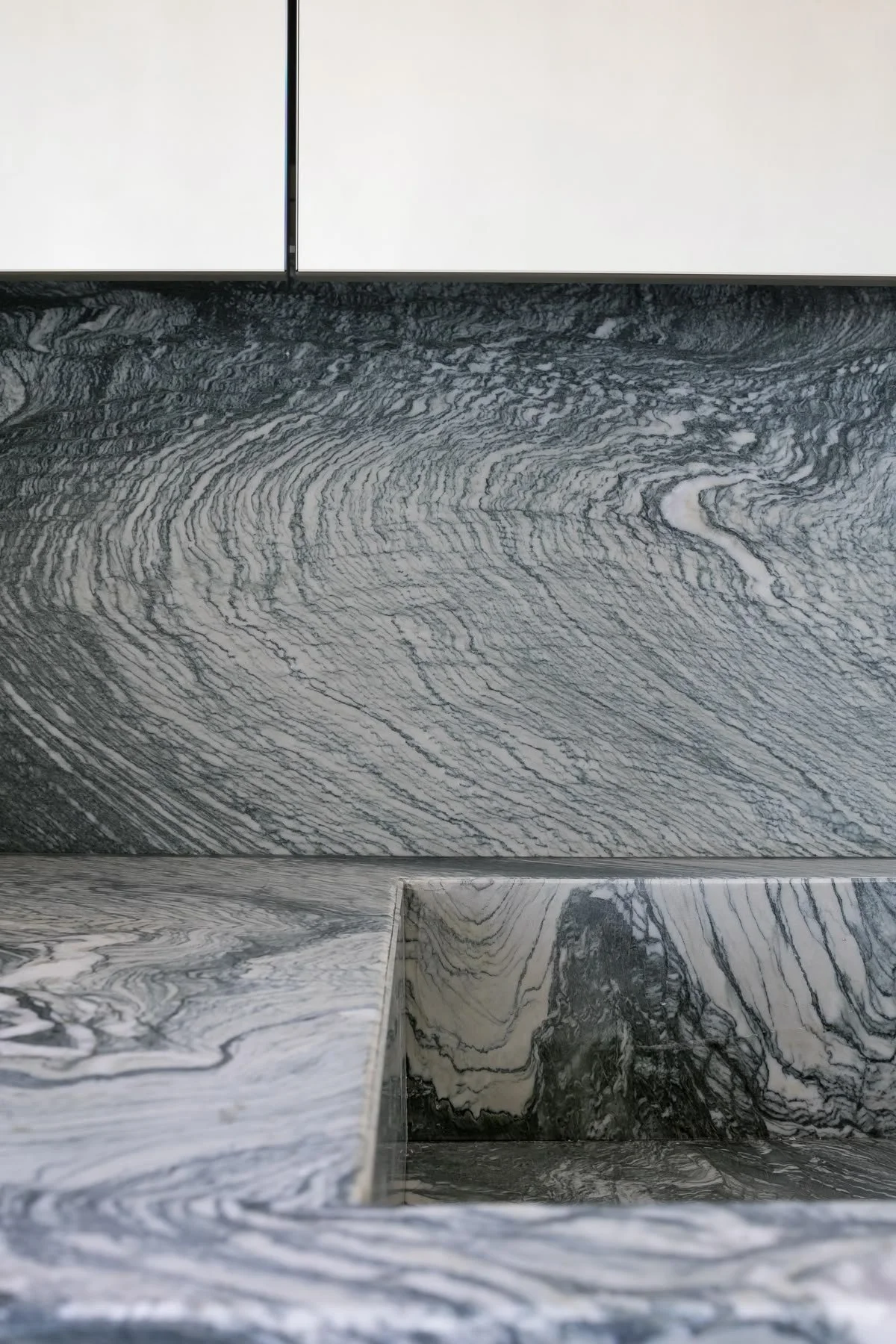
DO explore your local stone yards: There’s nothing better than walking the aisles of a well-stocked local marble yard. Seeing how the light hits the quartz deposits or how the colours shift in person is crucial.
DO ask about provenance: Understanding the origin of your marble connects you to its history and helps you gauge its physical properties.
DO purchase the specific slab: Natural stone is wonderfully inconsistent. The veining, character, and colour palette can change drastically not just from quarry to quarry, but from slab to slab within the same block. Always reserve the exact pieces that will be installed in your home.
DON'T purchase a slab sight unseen: A photograph sent by a supplier will never accurately capture the true undertones, crystalline structures, or natural fissures of a stone.
DON'T compromise with porcelain imitations: The market is saturated with large-format porcelains designed to mimic heavily veined marble. While printing has improved, they fall short in high-end spaces- lacking the depth, translucency, and cool density of natural stone. As surface prints, the illusion quickly breaks at edges and cut-outs where the veining doesn’t carry through.
DON'T blindly import from the other side of the world: While exotic stones are tempting, consider the environmental impact. Shipping heavy slabs across the globe significantly increases a project's carbon footprint. Whenever possible, seek out magnificent stones quarried closer to home.
Marble vs Daily Life: Striking the Balance
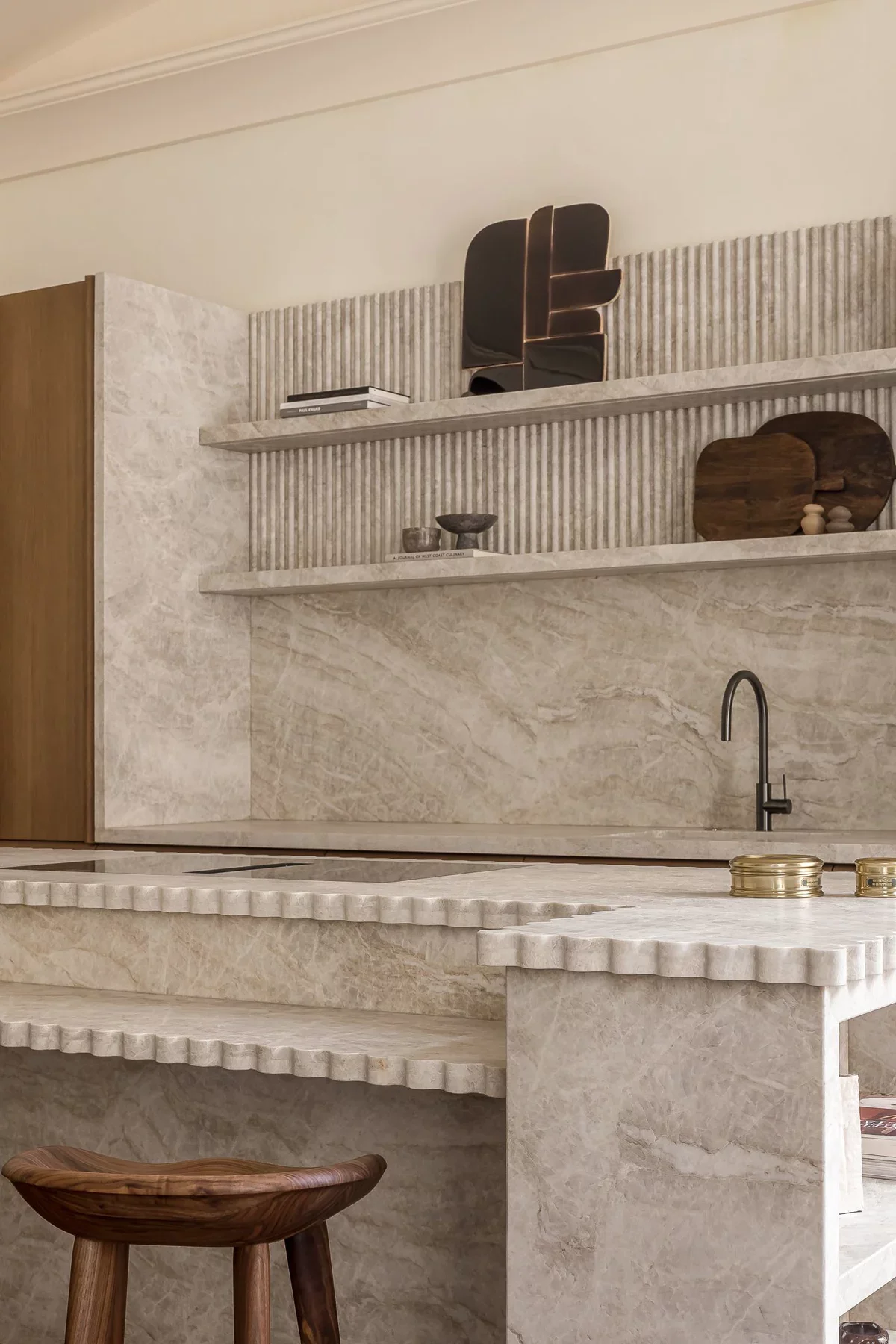
While we love the visual impact of a striking marble, its use should be thoughtfully considered within your daily lifestyle. Can you use a spectacular, heavily veined marble in a bustling kitchen or a busy grand entryway? Absolutely. But, it requires a mindset shift.
High-traffic areas naturally accelerate wear. If you are someone who desires a perpetually pristine, untouched surface, we recommend utilising softer, dramatic marbles in low-traffic, high-impact zones, such as a fireplace surround, a bespoke headboard feature, or the face of a home bar.
For hardworking prep zones or heavily trodden entryways, we will often nudge our clients toward a dramatic, dense quartzite, which offers similar visual weight and veining with incredible, granite-like resilience.
Durability & Preservation
Marble is undeniably breathtaking, but it’s also softer and more porous than engineered composites, making it vulnerable to etching and staining over time. Its high porosity also means water can penetrate the surface, causing temporary darkening. In wet environments such as bespoke showers, hard water may leave limescale deposits, while prolonged moisture can trigger oxidation of naturally occurring iron, resulting in unexpected amber discolouration.
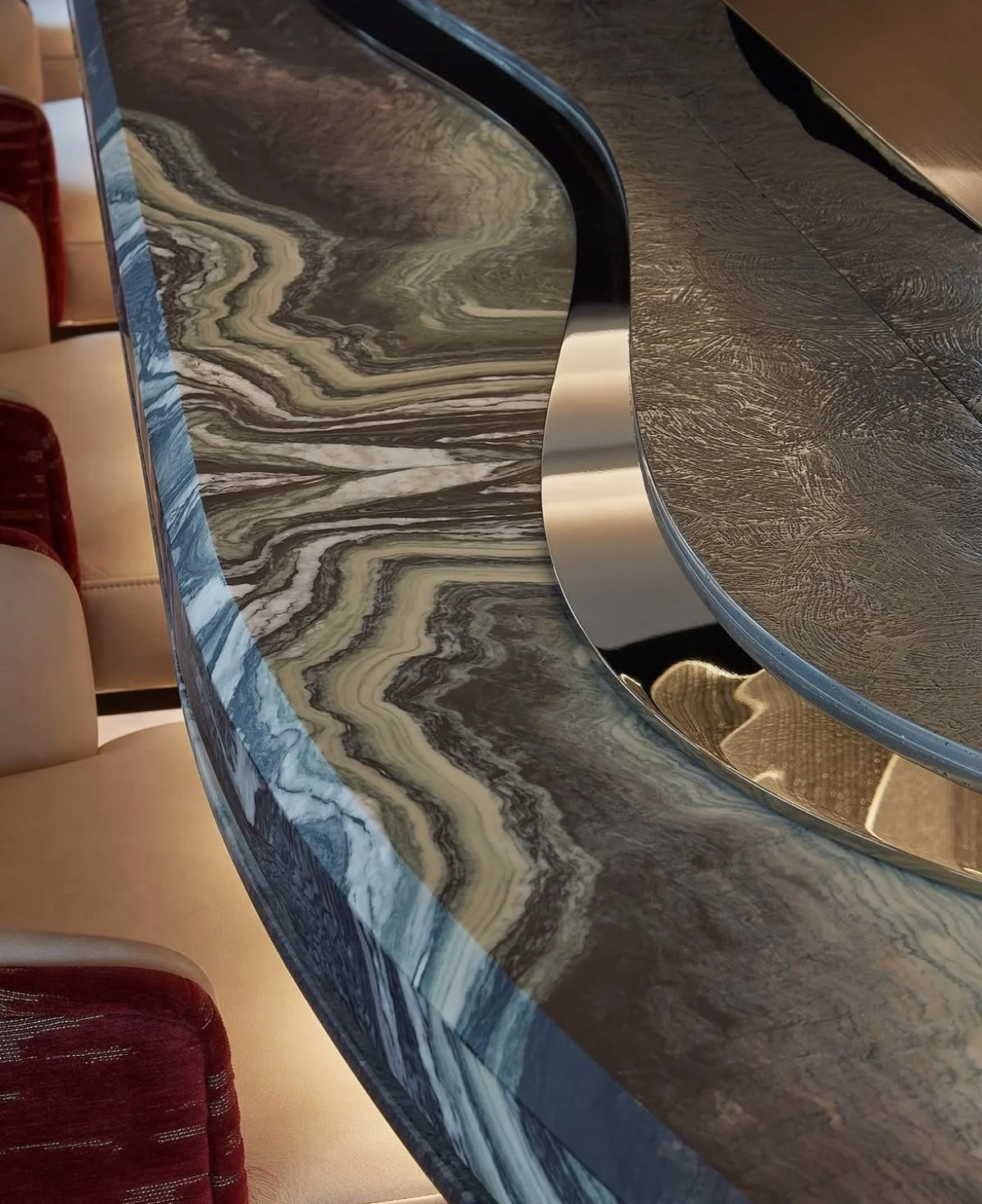
Marble is never 100% safe from damage. But as a designer, I believe that is entirely the point. We encourage our clients to embrace the "patina" of marble as a living material. That being said, there are a few things you can do to help keep marble looking its best:
DO choose the right finish: A 'honed' (matte) or 'leathered' finish is much more forgiving than a highly polished surface, as it easily hides minor scratches and etching.
DO invest in premium sealants (and understand their limits): A premium impregnating sealant alters the surface tension of the stone, acting as a repellent that buys you crucial time to wipe up spills. However, constant exposure to hot water and soaps gradually breaks down this efficacy.
DO re-seal wet zones frequently: While a living room fireplace surround might only need re-sealing every few years, a marble shower pan or a busy kitchen sink run should ideally be re-sealed every six to twelve months.
DO squeegee wet zones & wipe away standing water: If wrapping a shower in magnificent stone, make it a habit to squeegee the walls after use to prevent soap scum from degrading the sealant. Never allow water to pool around kitchen faucets.
DON’T use harsh chemicals: Never clean marble with bleach, vinegar, or acidic cleaners. Stick to pH-neutral stone soaps and warm water.
DON’T forget coasters and trivets: Always use a barrier between your gorgeous stone and condensation-heavy glasses, acidic fruit bowls, or hot pans.
A Finite Beauty: Sourcing Marble Responsibly
It takes millions of years for the Earth to compress minerals into a single slab of marble, making it an inherently finite resource. While stone itself is abundant, individual quarries and the most coveted, characterful veins are not - they are gradually depleting.
When sourcing, we prioritise suppliers who practise ethical quarrying and land rehabilitation, and we look to regional stones first to help reduce the impact of transport. As a studio, we also embrace a zero-waste approach wherever possible, repurposing offcuts from a kitchen island into bespoke plinths, side tables, or powder room splashbacks.
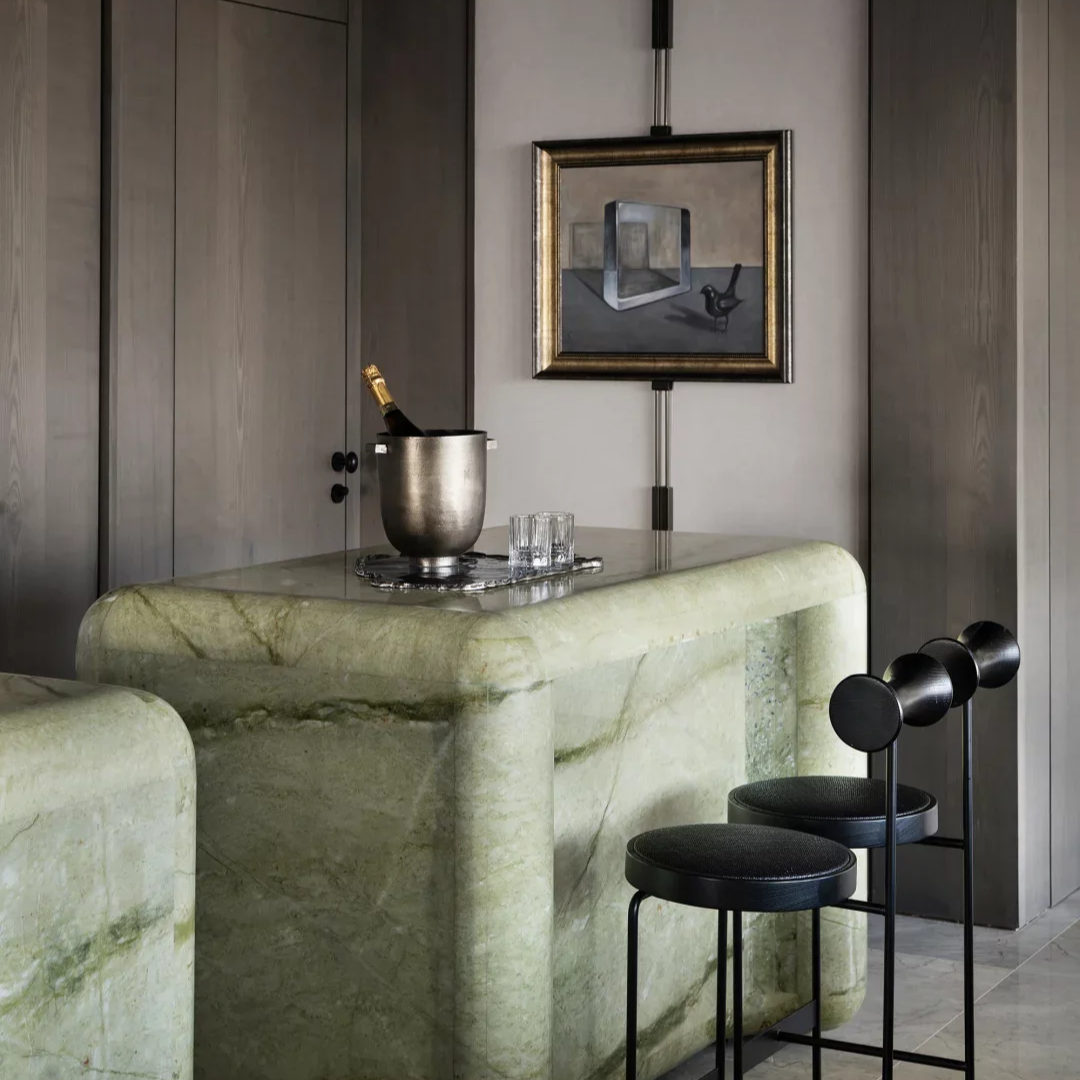
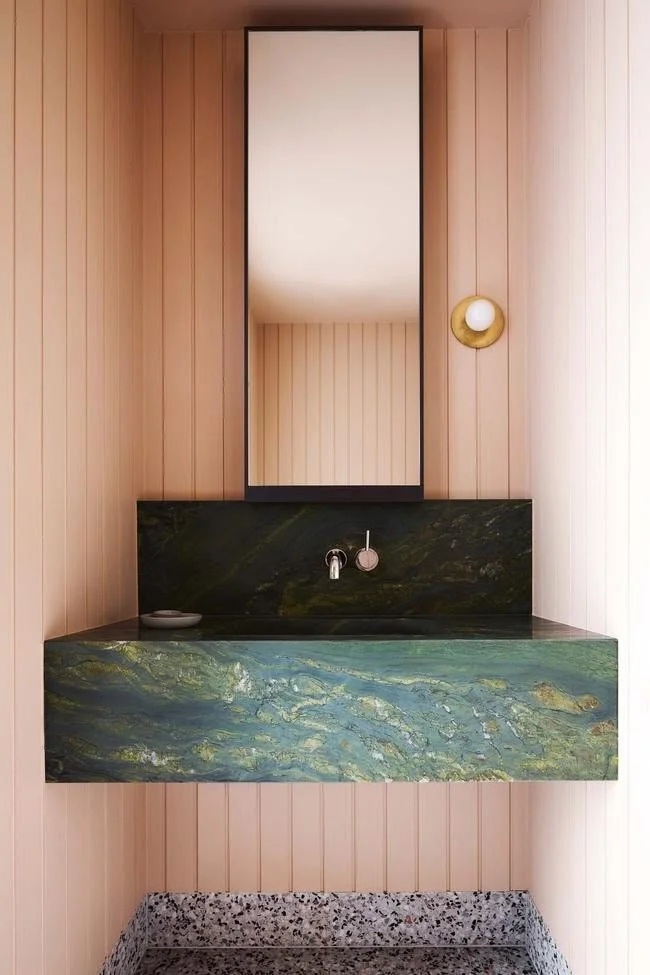
Designing with Marble: Restraint vs. Impact
When selecting a show-stopping stone, the goal is to create a space that feels deeply personal, rather than simply trendy. Choose a unique marble rather than a fad. That way, it won't go out of style quickly.
Gravitate towards your absolute favourite colour palette. If you are using a visually loud, striking marble, use it sparingly and in a considered way. Treat it as a singular "pop" or a piece of art, rather than engulfing the entire room, which can quickly lead to visual fatigue.
Where to go bold: The powder room is our absolute favourite place to unleash a dramatic stone. Because it is a transitional, jewel-box space where you don't spend hours at a time, it can handle high visual impact.
Where to show restraint: In a large kitchen, consider using a bold stone for the island, but calm the space down by pairing it with a quiet, muted perimeter counter or understated, tonal cabinetry.
Conclusion: Living Beautifully with Marble
A show-stopping marble is best approached with intention. When carefully selected, properly understood, and expertly fabricated, it becomes a defining element within a space- one that will bring lasting character to your daily life for years to come. .
Sourcing Guide: Our Studio’s Favourite Show-Stopping Stones
If you’re ready to move beyond the traditional white canvas, here are a few extraordinary stones we are currently coveting for our high-end projects:
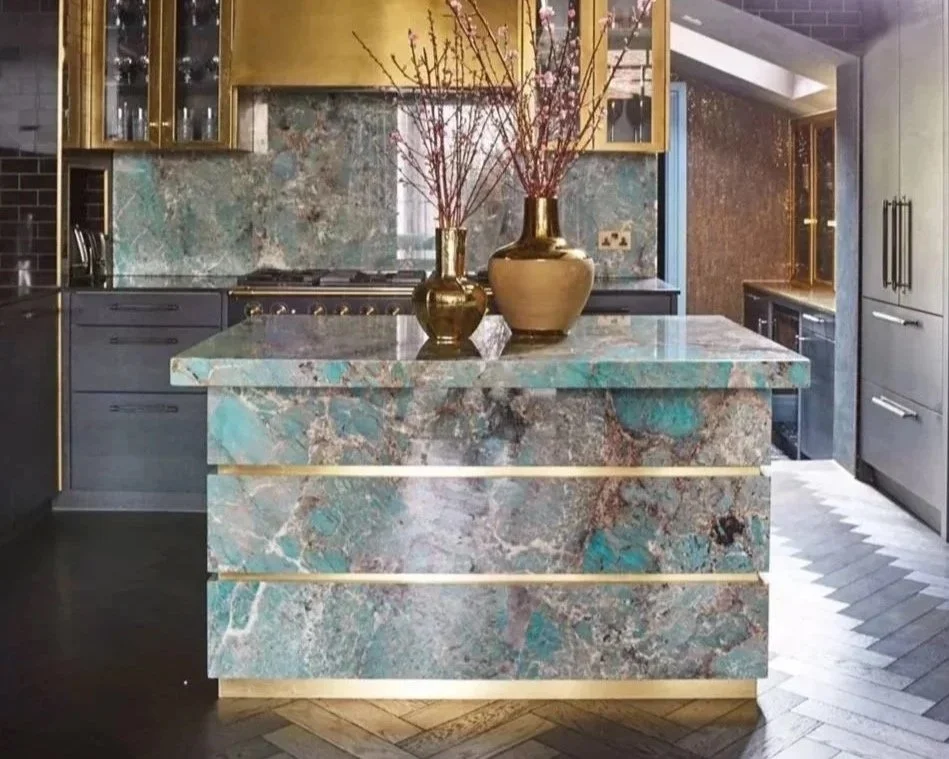
Amazonite Quartzite
Unapologetically bold and incredibly rare. This stone offers explosive, vivid shades of teal and bright turquoise, shattered by striking fault lines of charcoal, crisp white, and burnished gold. It is a true focal point that demands attention.
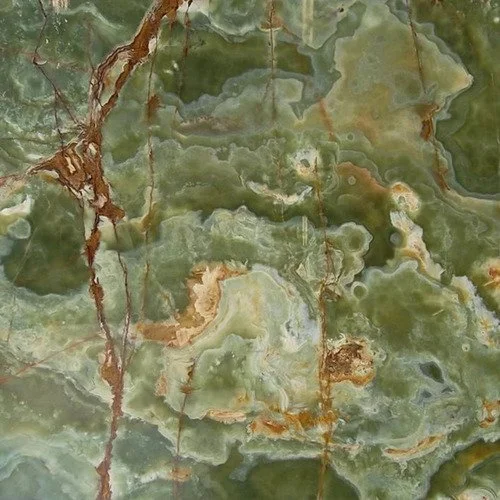
Green Onyx
Luminous, ethereal, and subtly translucent. Its milky, pale jade tones, paired with delicate, earth-toned veining, bring a serene but incredibly luxurious softness to a space. It is particularly breathtaking when used in heavy, monolithic forms or backlit to glow from within.
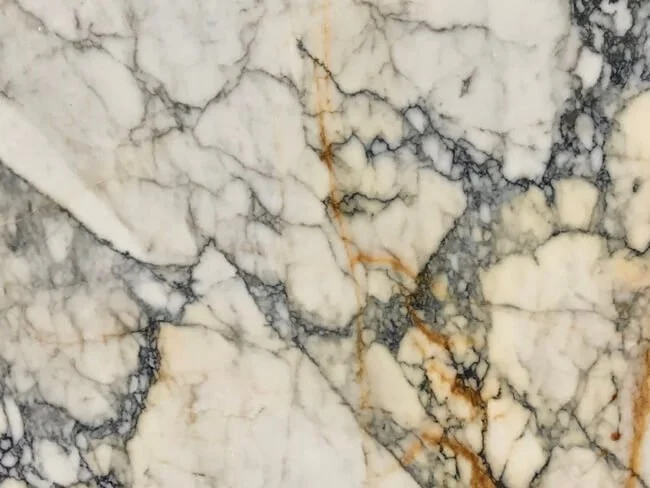
Paonazzo
For those who love a classic white base but crave artistic drama. This spectacular marble features deep, inky black and purple-grey veins that look as though they were painted by hand, beautifully warmed by surprising streaks of caramel and antique brass.

Avocatus
A phenomenal Brazilian stone that bridges the gap between granite and quartzite. It features deep, leathery greens with striking flashes of black and white. It feels incredibly organic and grounded, yet fiercely modern.
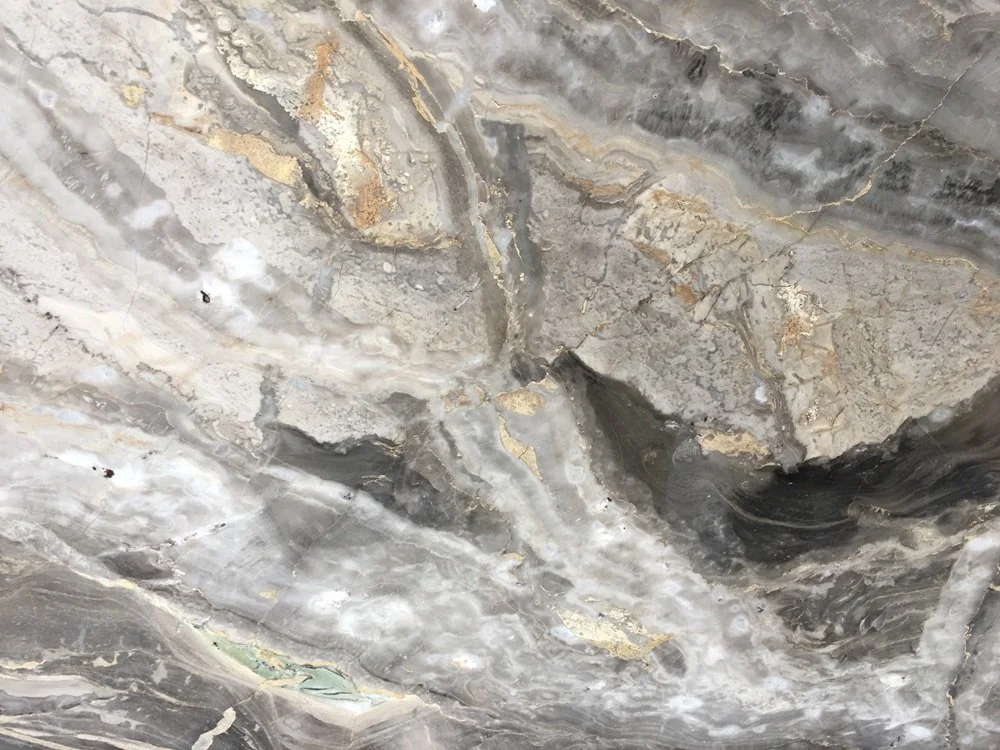
Arabescato Orobico
Masterful, fluid, and moody. Moving away from stark contrasts, this stone features sweeping, undulating waves of dove grey, cream, and warm taupe that flow together like a tempestuous ocean.
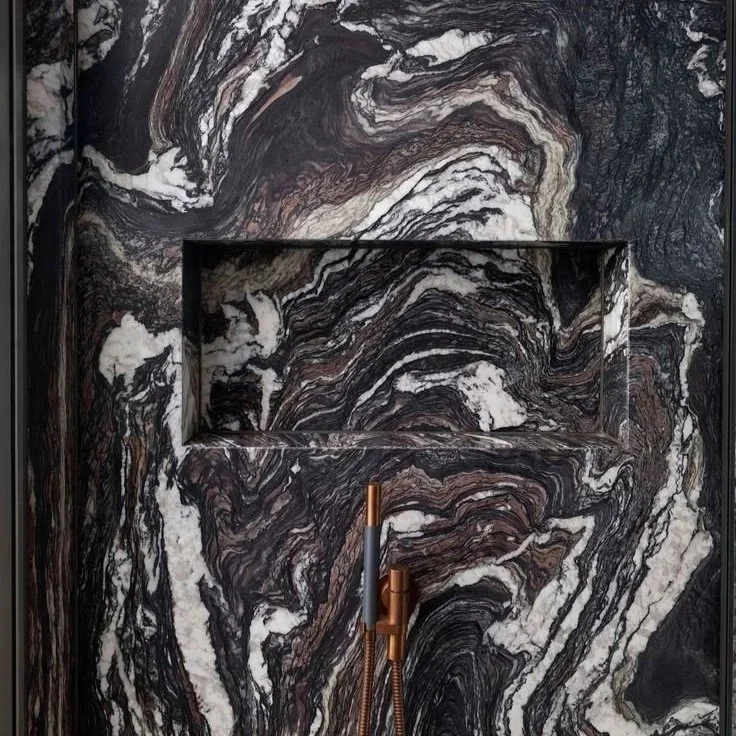
Breccia Viola
Characterised by its rich, fragmented chunks of claret red, cabernet, and creamy whites. It has a deeply historical, almost Roman aesthetic that looks devastatingly chic when applied to a modern, minimalist form.
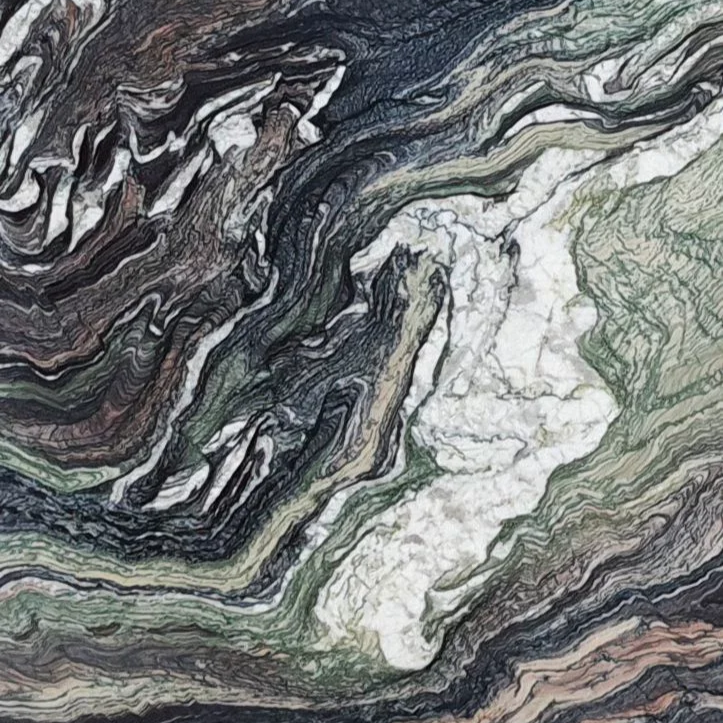
Rosso Luana
Not for the faint of heart. A wildly complex, mesmerising stone that swirls together unexpected, bruised hues of plum, deep forest green, and charcoal in a dynamic, almost wood-grain-like pattern.

Striato Olimpico
The ultimate in tailored, architectural stone. Its naturally occurring, perfectly parallel stripes of cool grey and crisp white bring a sharp, graphic, and strictly modern rigor to a bathroom or wet room.
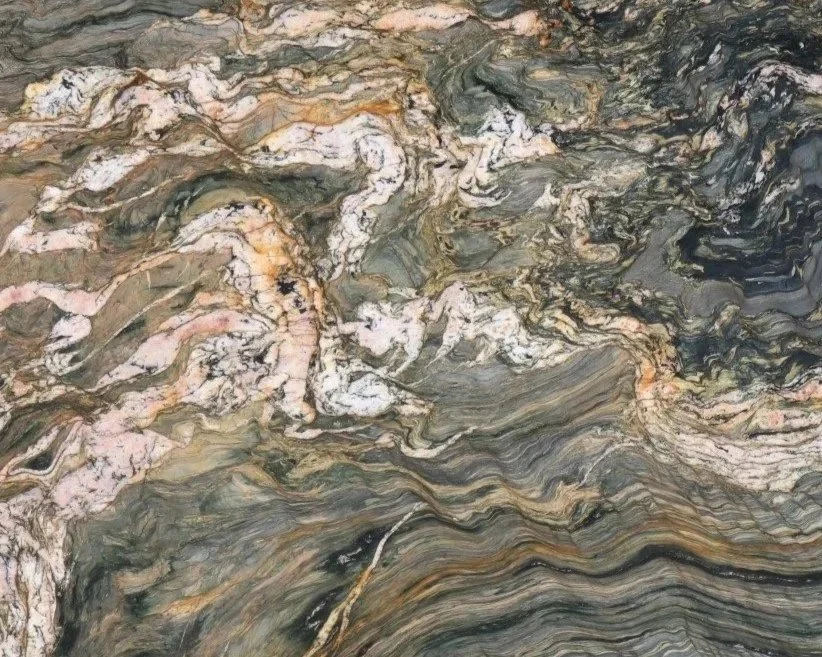
Fusion Quartzite
Like an aerial view of a dramatic coastline, this highly durable stone features mesmerising, sweeping bands of oceanic blues and greys colliding with rich, sandy golds and coppers.
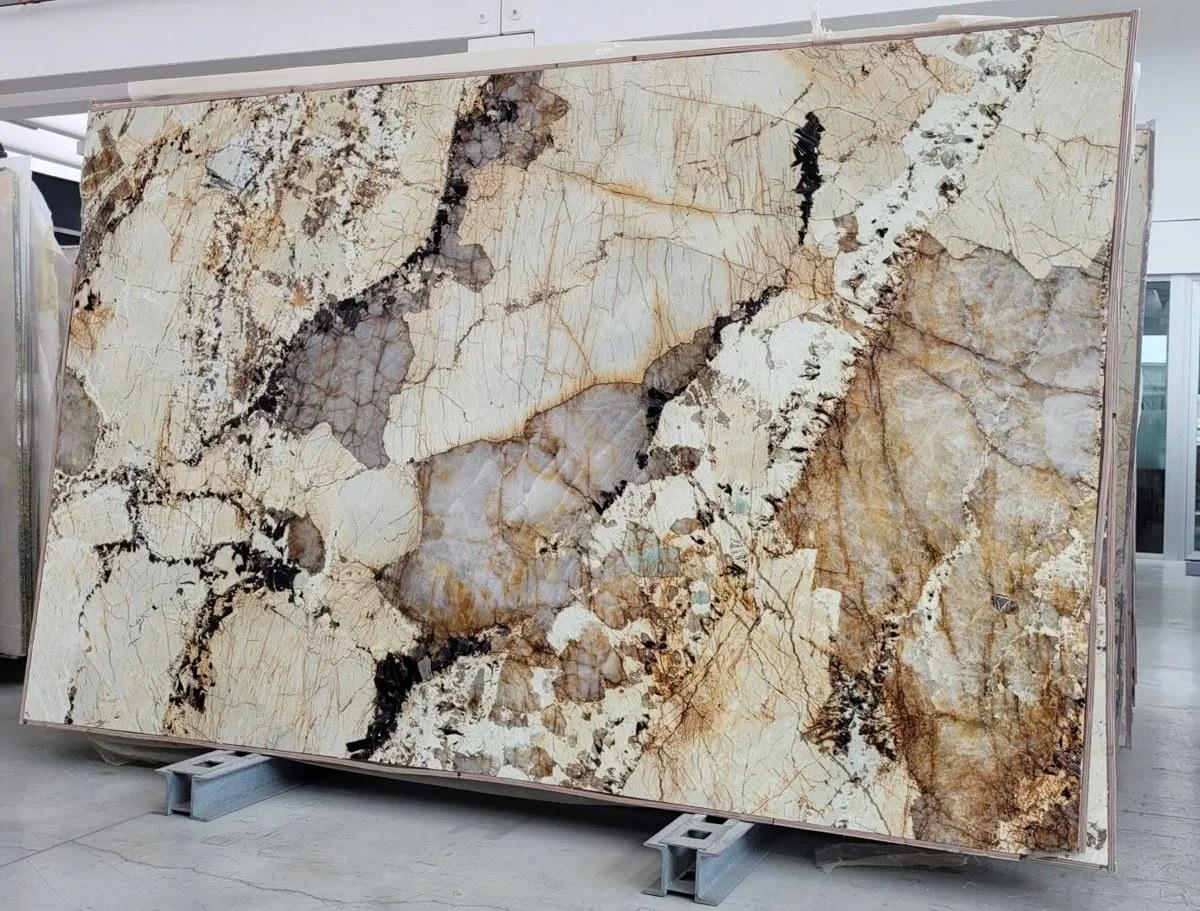
Patagonia Quartzite
A complex, volcanic-looking stone that features large, crystalline patches of translucent quartz set against opaque, earthy beige and black. Because parts of it are translucent, it can be stunningly backlit for a dramatic evening effect in a home bar or powder room.